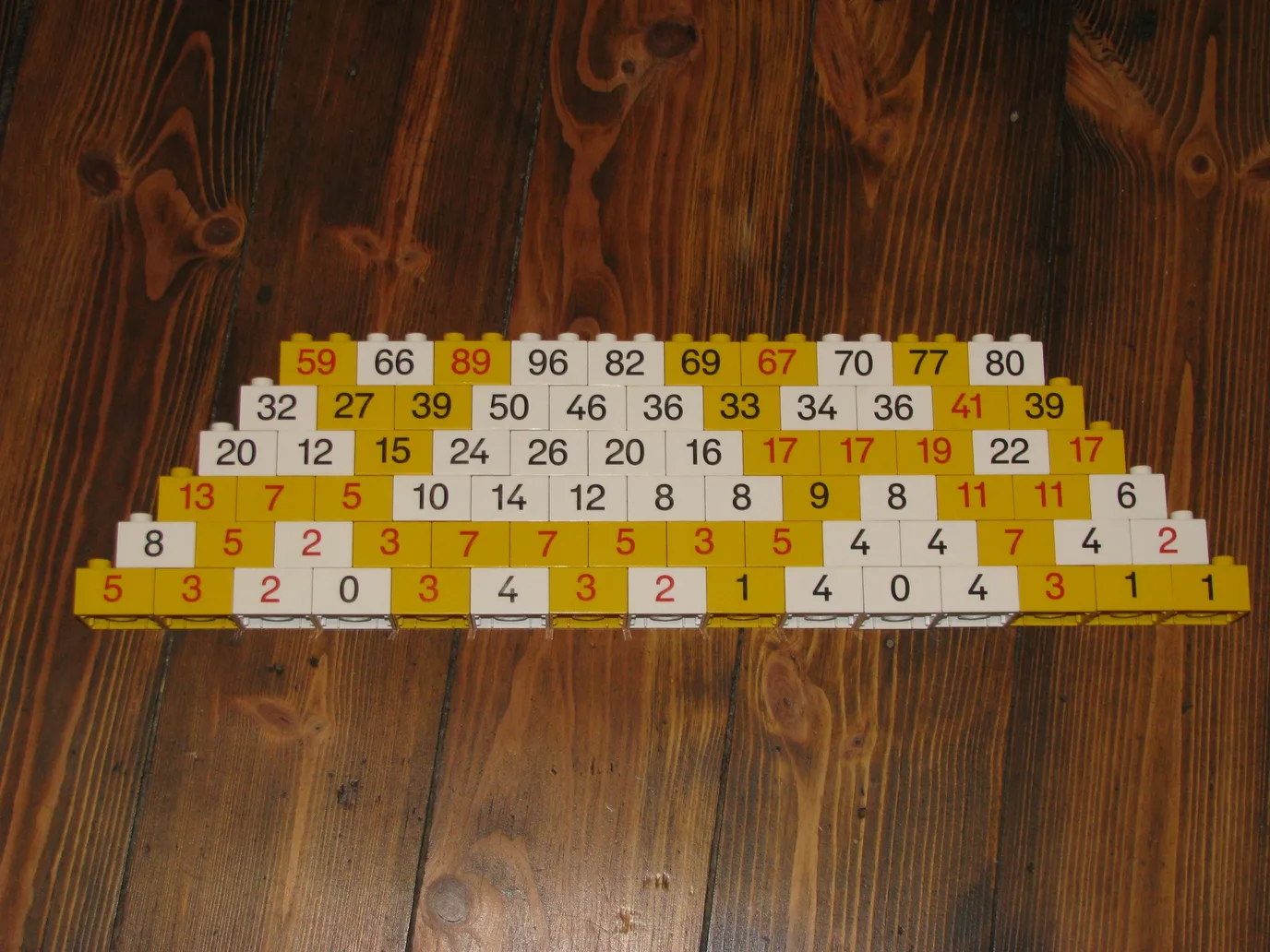
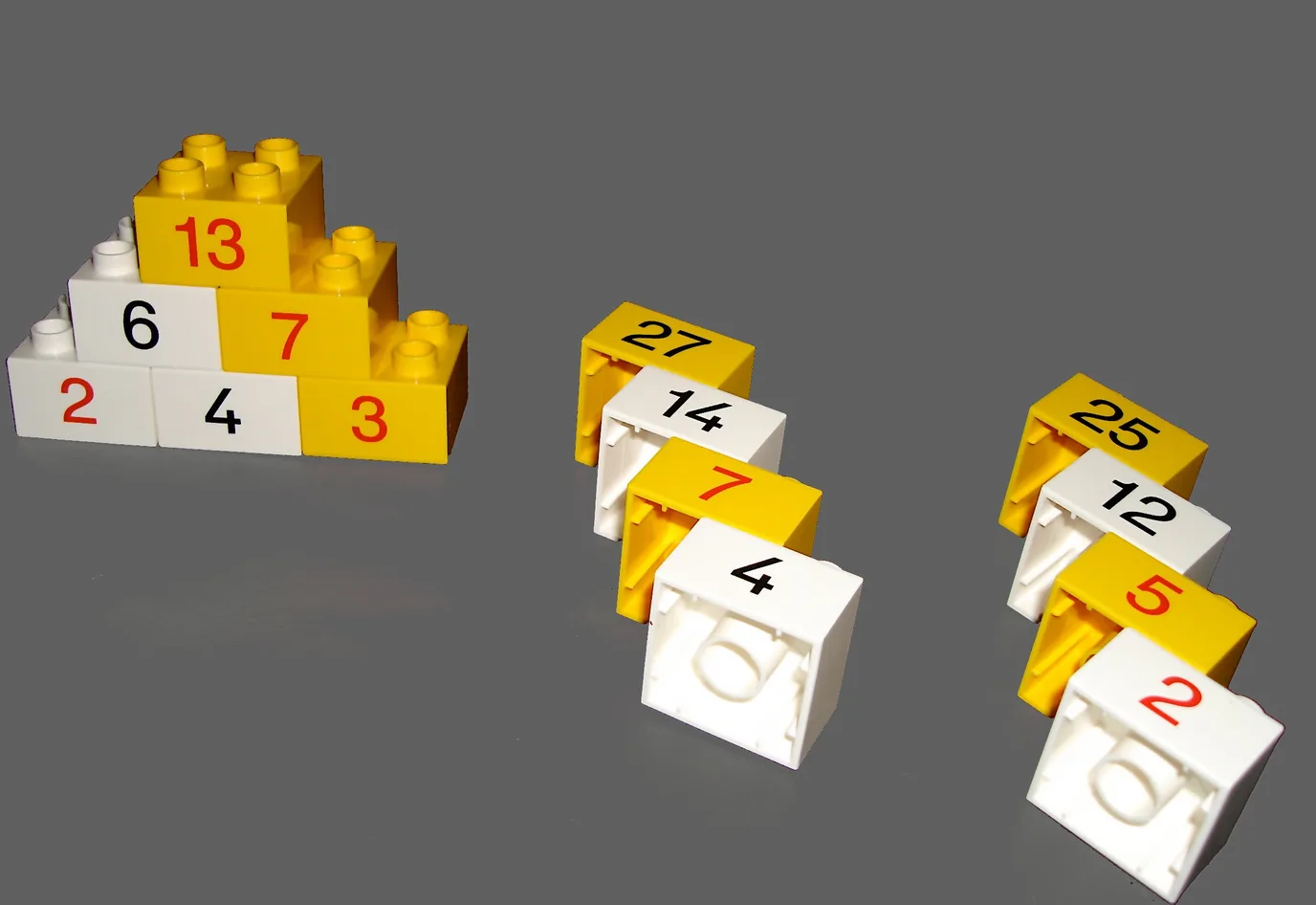
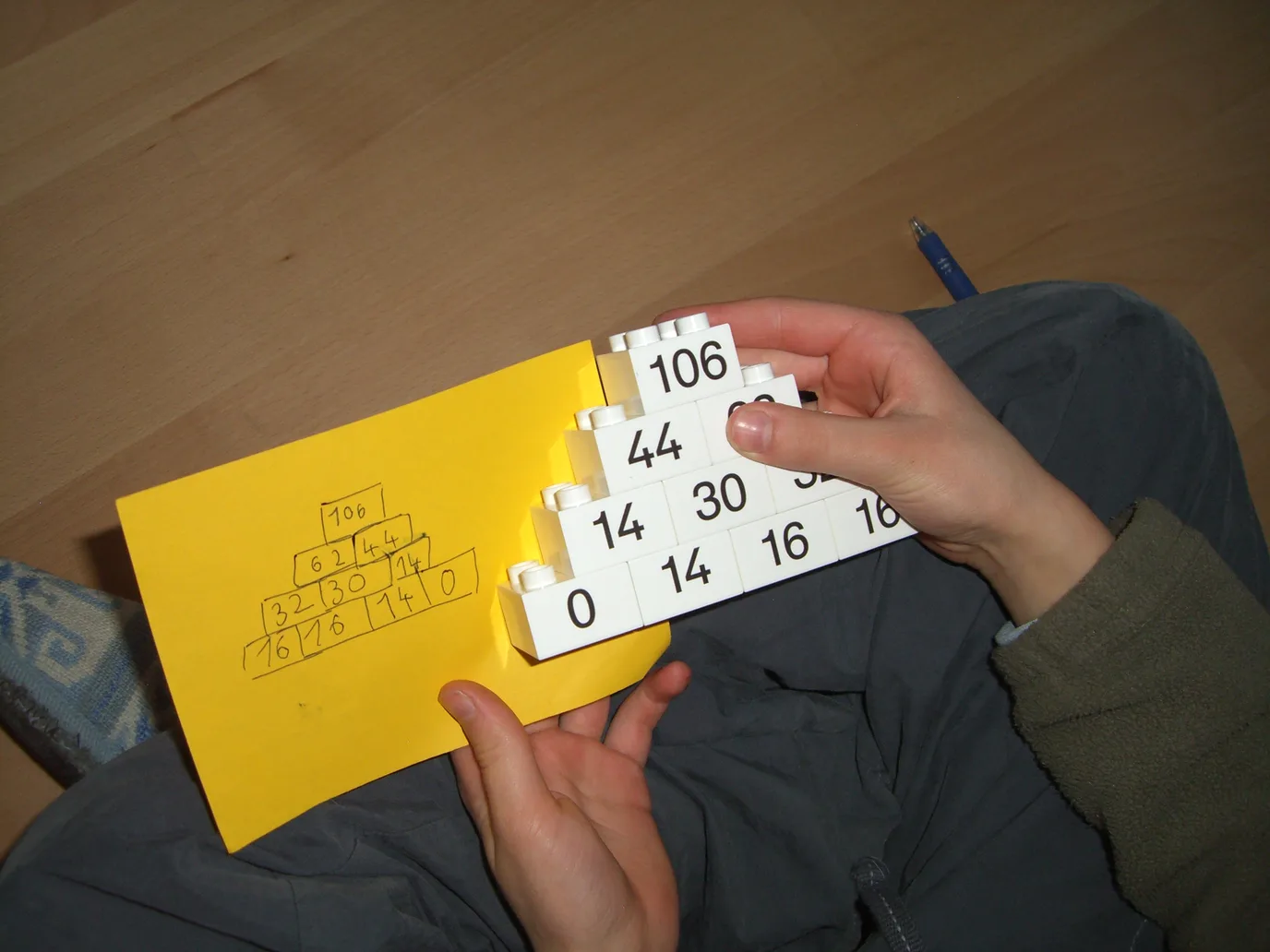
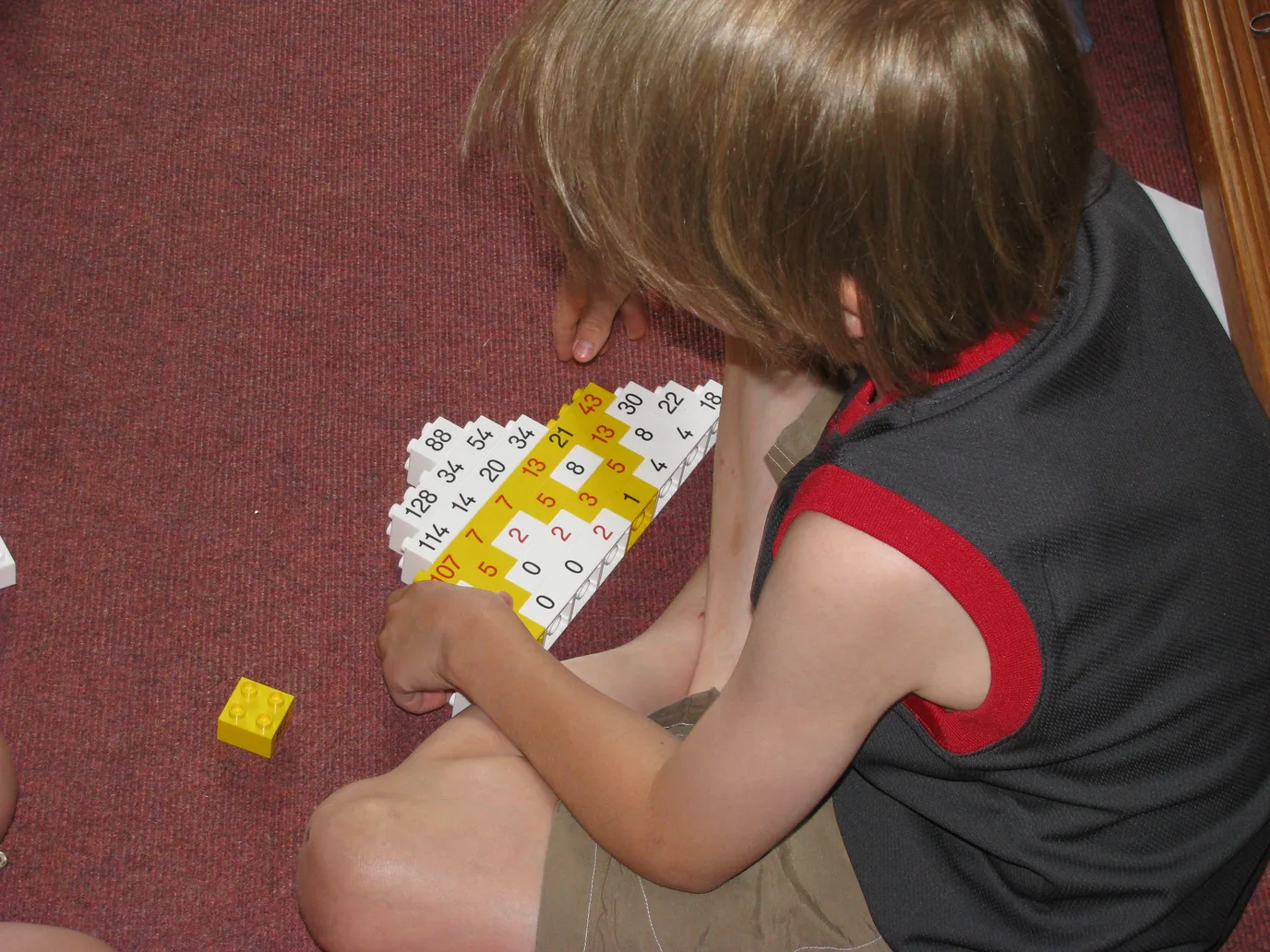
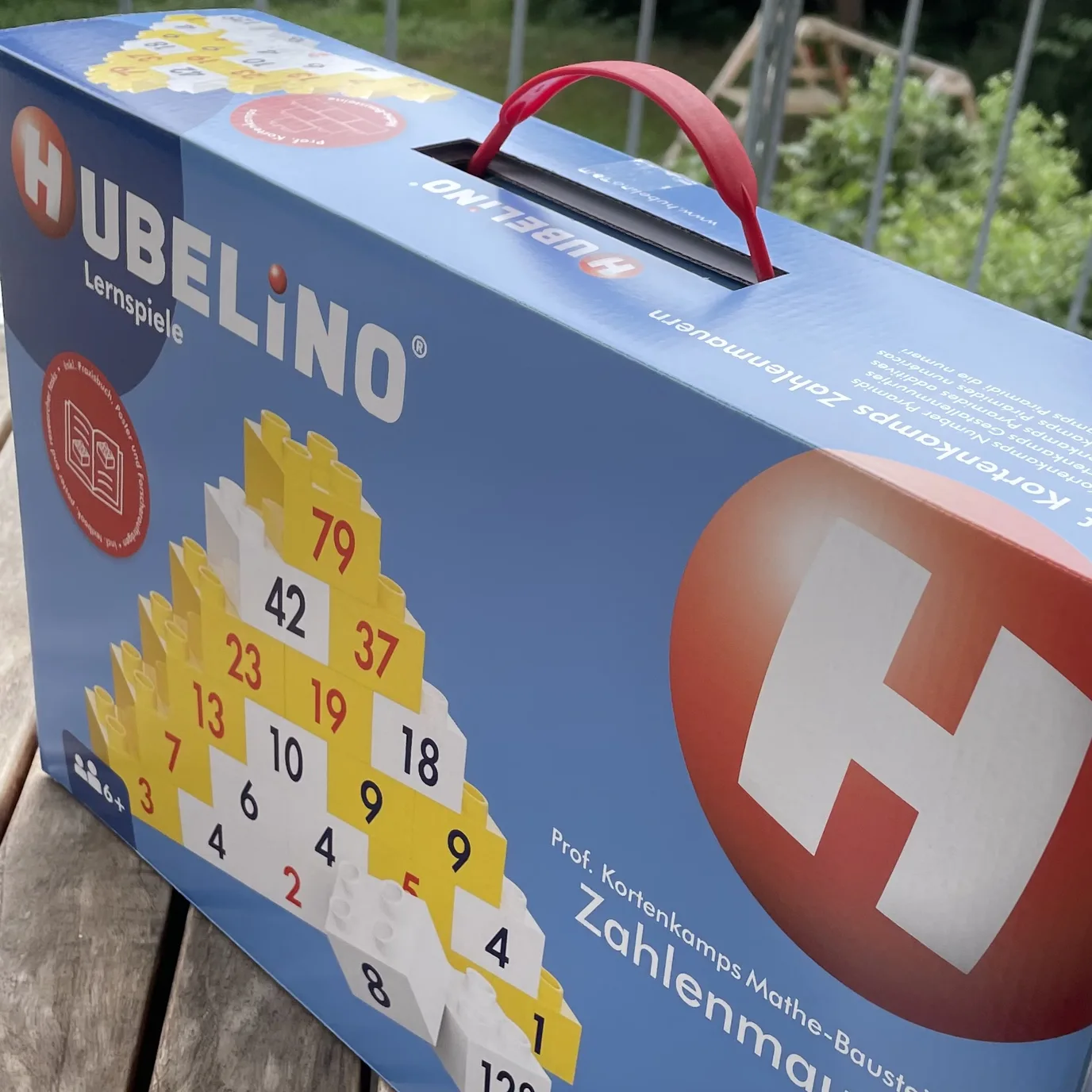
One rule is enough: a brick resting on two neighbouring bricks carries their sum. Row by row the wall grows until the top brick is reached.
On paper, number walls often stop at calculating. With bricks, children can swap a base brick, exchange two bricks or rebuild the wall – and immediately see what changes and what stays the same. Questions such as “What happens to the top brick if one base brick increases by one?” lead to real mathematical discoveries: each base brick counts as often as there are paths from it to the top.
The colours carry information, too: even numbers are on white bricks, odd numbers on yellow ones, and prime numbers are printed in red.